
What Should AI Handle in an Accounting Firm? A Conversation With Manfred Swarovski and Michelle Weinstein

.png)
IN THIS ARTICLE
Key Takeaways
- AI can bring records together, compare them, and flag what needs attention.
- Accountants must verify the evidence, add context, and decide what it means.
- AI works better from financial records already connected in the workspace than from one uploaded document.
- Read-only analysis keeps the software from changing the client’s books.
- The best use of AI moves the accountant’s expertise closer to the client’s decision.
AI should bring records together, compare them, and flag what needs attention. Accountants should verify the evidence, add business context, decide what matters, and communicate the recommendation.
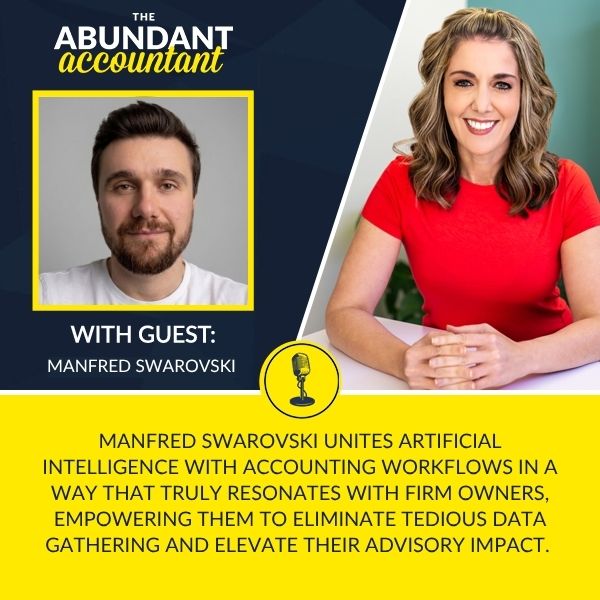
Veltrix founder Manfred Swarovski and host Michelle Weinstein explored this boundary on The Abundant Accountant Podcast: where should AI preparation stop, and where must professional judgment begin?
Michelle Weinstein is the founder of The Abundant Accountant and a sales strategist for CPA, EA, accounting, tax, bookkeeping, and fractional CFO firm owners. She helps them explain their value, set fees, and bring in premium clients without high-pressure sales.
Listen to Episode 191 and read the show notes.
Watch the Full Conversation
Watch Manfred and Michelle discuss how accounting firms can save time with AI while keeping professional judgment at the center of the work. If the video does not load, watch it on YouTube.
What should AI prepare before an accountant reviews the work?
AI is most useful for repetitive, data-heavy preparation.
An accounting firm may ask the same questions across many client reviews: What changed since the last period? Which costs moved? Is anything missing? Where should the reviewer spend more time?
AI can gather the available information, compare periods, organize files, and narrow a large set of records to the areas that may deserve attention.
Manfred described this as a first pass. The goal is not to finish the accountant’s work. It is to reduce the time spent finding where that work should begin.
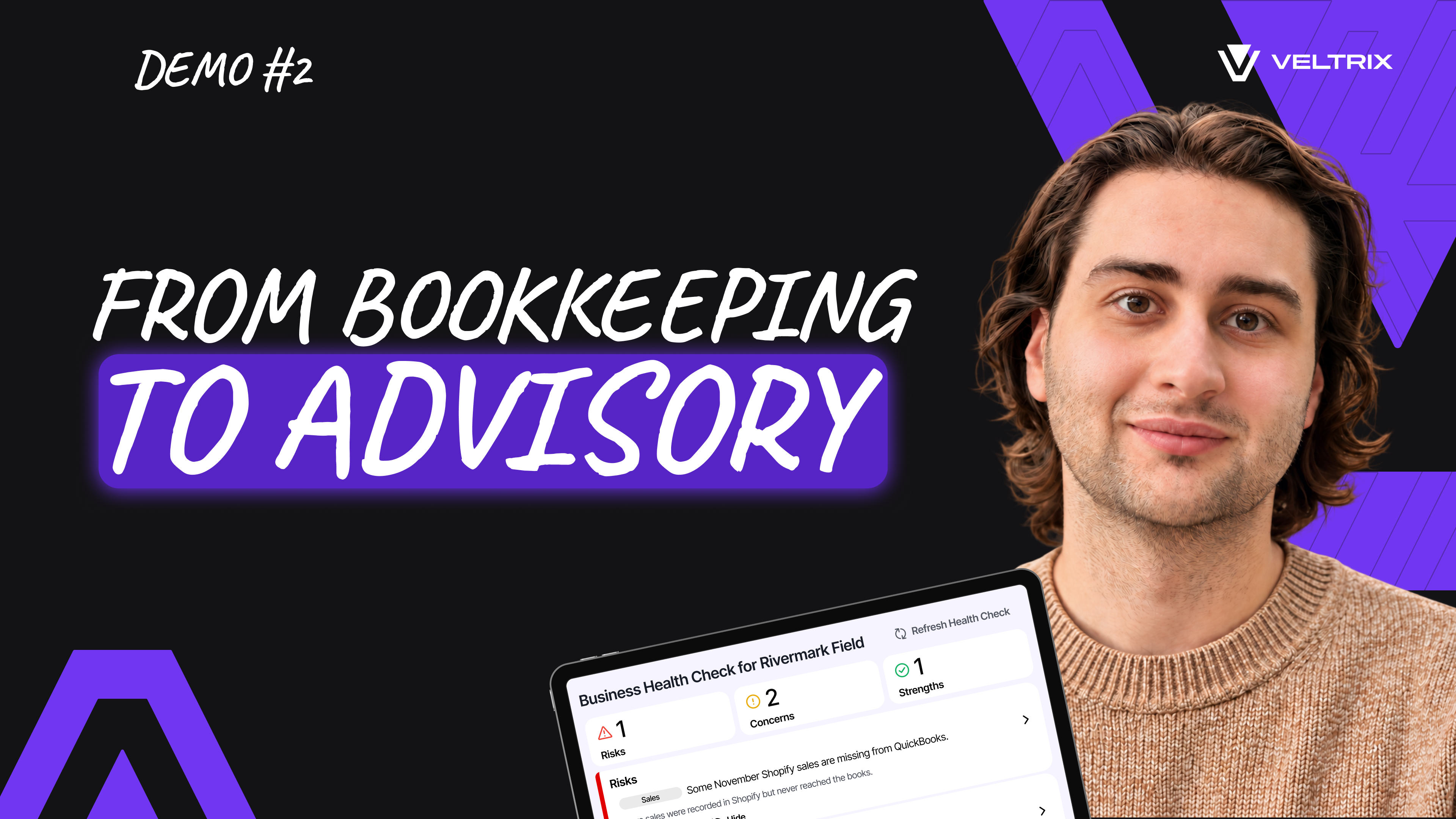
The Client Business Health Check is one way to run that first pass. It can point the accountant toward possible issues and show the supporting information to review.
Why does an AI finding still need accountant judgment?
A detected change is evidence, not a conclusion.
Michelle compared good preparation to the information a doctor reviews before making a decision. An X-ray or blood test may reveal something important, but it does not replace the person who understands the full situation.
Manfred made the same point with business data. A profit margin that looks weak for one company may be strong for another. Industry, location, competition, size, pricing, and other circumstances can change what the number means.
The records may show that a cost increased. They may not show that the client approved a one-time project, changed staffing, or made a deliberate investment.
The accountant must decide whether the finding matters, what context is missing, what the firm agreed to do, and what the client should hear next.
When does accounting-specific AI add more than a general AI chat?
A general AI tool can analyze a report that someone uploads. That can be useful, but the quality of the answer depends on what the person remembered to provide and how clearly they explained it.
The next question often starts the process again: export another report, upload another file, and explain the business context one more time.
Veltrix works from the financial records already connected in a client workspace. The owner and accountant can ask questions using the information available there. The accountant can open the reports behind an answer and add context that is not present in the records.
That makes the AI part of the firm’s working process rather than a separate chat whose answer has to be reconstructed later.
It also gives the accountant a direct role in the review. Business owners can explore their numbers, and the accountant can review the same information, add context, and decide what it means.
Why does a read-only copilot matter?
Michelle raised a practical concern from firm owners: what happens after an AI tool is connected to QuickBooks, Xero, or another source?
The key question is what the tool is allowed to do.
Veltrix is a copilot, not an agent that acts inside the client’s accounting system. Its connections are read-only. It can analyze the information needed to answer a question, but it cannot post, edit, or delete anything in the source tools.
That keeps analysis separate from execution. The accountant can inspect the result and decide what to do without the software changing the books first.
Firms still need permission to use the information and must follow their existing privacy and confidentiality rules. Read-only access protects source records from changes; it does not replace those responsibilities.
How can AI make an accountant’s expertise more valuable?
Manfred drew a useful distinction: AI can take over routine preparation, or it can make professional expertise more valuable. Michelle focused on the second outcome—using saved preparation time for better judgment and client advice.
A client is not paying only to be told that a number changed. The value lies in deciding whether the change matters, explaining what may be driving it, connecting it to a decision, and helping the client decide what to do next.
If AI shortens preparation, the firm can spend more of the meeting on those questions. That does not automatically create higher fees or revenue. The firm still has to define the service and explain why its judgment matters.
Used well, AI does not make the accountant less important. It helps the accountant reach the work that requires expertise sooner.
Where should an accounting firm start?
For firm owners who feel overwhelmed by AI, Manfred’s advice was to start small.
First, experiment with a general AI tool on something low-risk. Notice what it does well, where it needs more context, and where you would not rely on it.
Then apply the same discipline to an accounting workflow. Run the first Business Health Check on the firm’s own business or on one client review where the firm has permission to use the data.
Compare the findings with your own assessment. Open the supporting reports. Note the context Veltrix did not have, any result that looked important but was not, and any finding you would change or reject.
The purpose of the test is not to prove that AI is right. It is to learn which preparation it can accelerate and where the accountant’s review changes the outcome.
How should firms divide the work between AI and accountants?
The useful boundary is simple:
- AI prepares the evidence.
- The accountant verifies it and adds context.
- The accountant owns the interpretation, recommendation, and client conversation.
Connected data and a focused first pass can help firms reach the important work faster. But saved preparation time has value only when the accountant turns it into better judgment, clearer advice, and stronger client conversations.
The best use of AI is not to remove the accountant from the decision. It is to move the accountant’s expertise closer to it.
If you want to test that division of work, explore Veltrix for accountants and the Partner Firm Program.
Listen to Episode 191 and read the show notes.
Connect with Michelle Weinstein
Find what’s worth a client conversation